Current-state system map
A clear model of inputs, decisions, handoffs, tools, owners, outputs, and recurring failure points.
Operational systems consulting
C&F maps how work actually moves, finds the fragile handoffs, and designs an operational system that remains clear when the founder is busy, the team grows, or the week stops behaving.
When it fits
This service is for founders, independent professionals, and small teams whose delivery depends on memory, manual rescue, or one person knowing how everything connects.
What C&F designs
The scope can cover one painful workflow or the wider operating layer. Recommendations stay tied to the real work, available capacity, and existing tools.
A clear model of inputs, decisions, handoffs, tools, owners, outputs, and recurring failure points.
A simpler target workflow with explicit ownership, decision rules, exceptions, and quality controls.
A practical decision about what stays, what connects, what disappears, and where authoritative information lives.
A staged plan that fixes the highest-cost friction first instead of attempting a dramatic operational rebirth on Tuesday.
SOPs, checklists, templates, and operating notes written for use during the work, not for ceremonial storage.
Scoped setup, workflow changes, and handoff support when the mandate includes putting the design into operation.
How it works
Share the current tools, documents, examples, recurring friction, constraints, and what keeps needing manual rescue.
C&F traces how work actually happens, including exceptions and unofficial workarounds that the tidy diagram forgot.
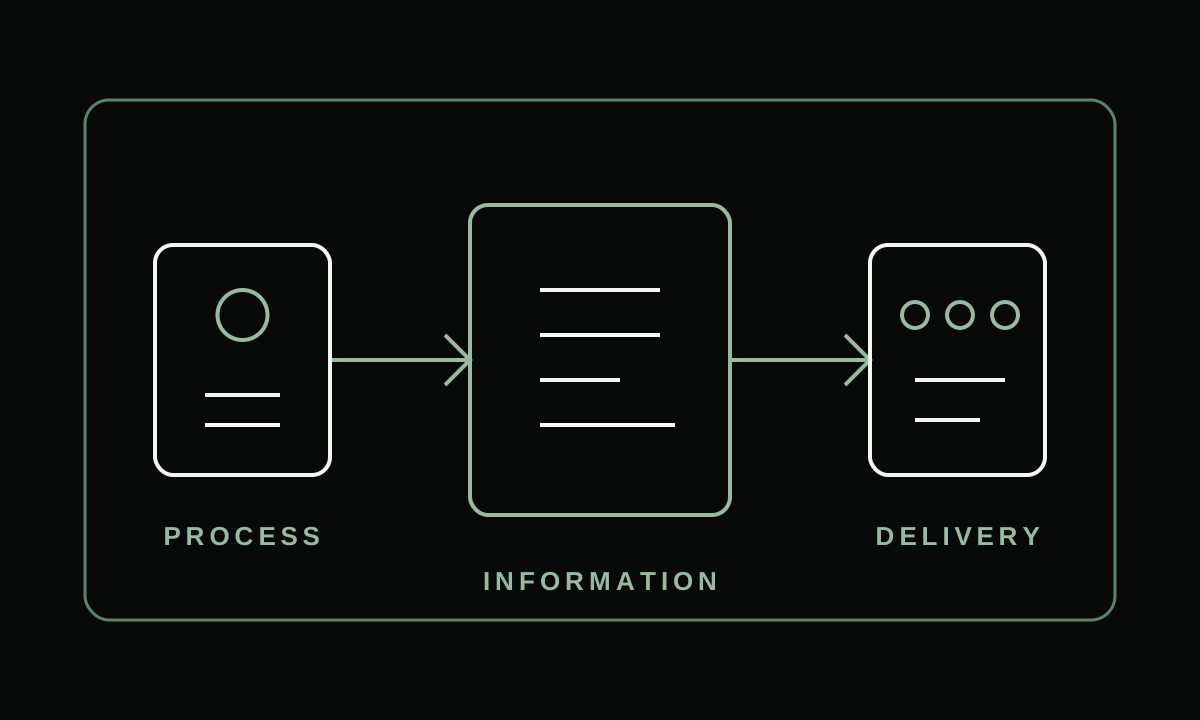
The process, information flow, ownership, and controls are rebuilt around the outcome the operation needs.
Approved changes are introduced in a sensible order, documented, tested, and adjusted against real use.
What this is not
Operational systems FAQ
Both can be part of it, but the core is systems architecture: the process, information, tools, ownership, controls, and delivery structure are designed as one operating layer.
Yes. Small operations often benefit quickly because one fragile workflow or founder-held process can affect everything around it.
Only when it solves a defined operational need. Existing tools are kept when they can support the target system without creating unnecessary maintenance.
Yes. Client intake, delivery, approvals, recurring reporting, and other bounded workflows can be handled as focused projects.
Start with context
Send the current setup and the friction you want removed. C&F will identify the next useful step and provide an estimate when the scope is clear.